

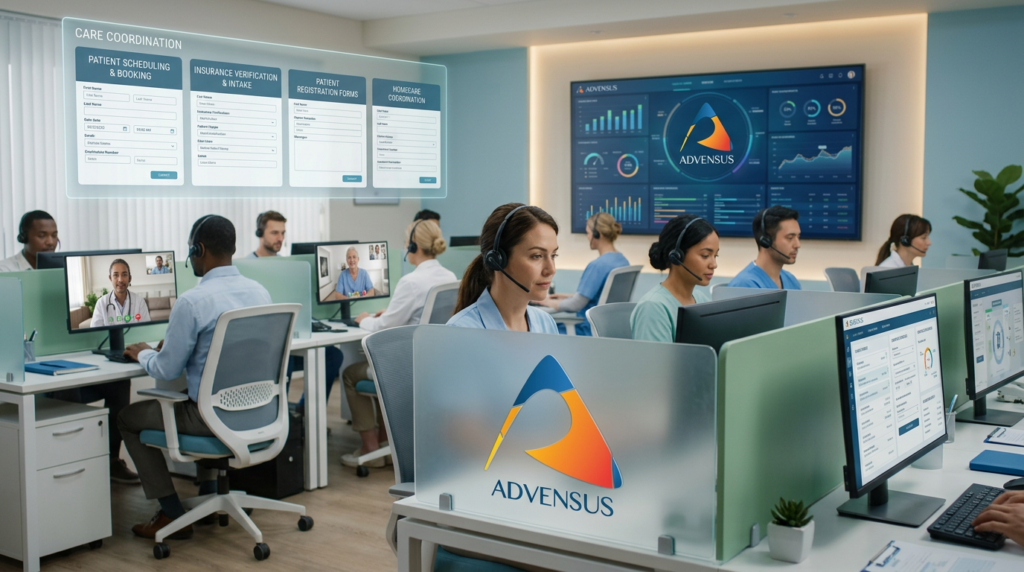
Healthcare organizations are under pressure to improve patient access, reduce administrative burden, lower operating costs and deliver a better patient experience. Contact centers sit at the center of that challenge.
Patients call, chat or email for appointments, registration, eligibility questions, reminders, onboarding, homecare scheduling, billing support, medication-related questions and follow-ups. Many of these interactions are administrative, but they still affect how patients feel about the organization.
Automation can help. It can reduce repetitive work, improve routing, accelerate scheduling and help patients get answers faster. But healthcare is different from retail, travel or general customer service. The stakes are higher, the information is more sensitive and the patient may be anxious, confused or vulnerable.
That is why the best healthcare contact center model is not automation instead of people. It is automation supporting people.
Why Healthcare Contact Centers Need Automation
Administrative work is one of healthcare’s biggest friction points. CAQH’s 2025 CAQH Index found that U.S. healthcare avoided an estimated $258 billion in administrative costs in 2024 through electronic transactions and improved data exchange. The report also highlights the industry’s continued push toward administrative automation, interoperability and AI adoption.
For contact centers, this matters because many patient interactions are tied to administrative workflows. If appointment scheduling, eligibility checks, reminders, registration or documentation are slow, the patient experience suffers.
Automation can improve:
- Appointment scheduling and reminders
- Patient intake and registration
- Eligibility and benefit verification
- Call routing and triage
- Status updates
- Agent knowledge support
- Documentation and call summaries
- Follow-up workflows
- Back-office processing
Used correctly, automation can reduce wait times and allow agents to focus on interactions that require empathy, judgment or deeper support.
But Patients Still Want Human Guidance
Patients are increasingly using digital tools and AI for health information, but trust remains a concern.
KFF’s 2026 tracking poll on AI use for health information and advice found that about one-third of U.S. adults say they have used AI for health information or advice in the past year. However, many users did not follow up with a professional afterward, including 42% of those who asked about physical health and 58% of those who asked about mental health.
That creates a clear warning for healthcare organizations: AI can help patients find information, but it should not replace responsible guidance, escalation or clinical direction.
In a contact center environment, this means automation should be designed to support access and efficiency — not to isolate patients from human help when the situation requires care.
Where Automation Works Best
Healthcare automation is most useful when the task is repetitive, structured and low-risk.
Examples include:
Appointment reminders
Automated reminders can reduce missed appointments and help patients confirm, cancel or reschedule with less friction.
Basic scheduling support
Automation can help patients find available times, confirm locations, send preparation instructions or route them to the right department.
Patient registration
Digital intake and registration workflows can collect information before the visit and reduce administrative bottlenecks.
Status updates
Patients can receive automated updates about forms, referrals, appointment confirmations or next steps.
Agent assistance
AI can help agents by summarizing calls, surfacing approved information, suggesting next steps and reducing documentation time.
These use cases improve efficiency without asking automation to make sensitive decisions alone.
Where Human Agents Still Matter
Human support remains essential when the interaction involves uncertainty, emotion, privacy concerns or complex coordination.
Examples include:
Confused or anxious patients
A patient who does not understand next steps may need reassurance, not just an automated message.
Complex scheduling needs
Patients managing multiple appointments, transportation issues, caregiver availability or specialty care often need live support.
Homecare and caregiver coordination
Home aid scheduling and caregiver orientation require accuracy, empathy and coordination across multiple people.
Escalations and complaints
A frustrated patient, missed appointment, access issue or service failure should move quickly to a trained human agent.
Sensitive information
Healthcare support teams must be careful with privacy, identity verification and protected information. Human oversight remains important in risk-sensitive situations.
The American Hospital Association’s 2026 workforce analysis notes that workforce pressure, rising costs and demand for efficiency continue to shape healthcare strategy. In that environment, contact centers need to use automation wisely while preserving human care where it matters most.
Building the Right Hybrid Model
A strong healthcare contact center should define which interactions are automated, which are agent-assisted and which require direct human ownership.
A practical model looks like this:
Automate: reminders, basic confirmations, simple status updates and routine intake steps.
Assist: call summaries, knowledge base suggestions, documentation support and next-step recommendations for agents.
Escalate: confused patients, complaints, privacy concerns, complex scheduling, homecare coordination and sensitive account issues.
Protect: HIPAA-related workflows, identity verification, access to patient information, audit trails, QA reviews and compliance-sensitive processes.
This structure keeps automation useful without allowing it to create risk or frustration.
Why Advensus Fits This Need
Advensus has been delivering healthcare solutions since 2014 and is a HIPAA-compliant organization. Its healthcare support capabilities include medical appointments, back-office support, patient registration, home aid scheduling and homecare staffing, patient onboarding, caregiver orientation, HR services and acknowledgement of content for pharmaceutical companies.
Advensus also supports healthcare operations through trained teams, quality management, compliance awareness, reporting and flexible staffing across nearshore locations in the Dominican Republic and Trinidad & Tobago.
For healthcare organizations, that combination matters. The goal is not simply to answer more calls. The goal is to create a support operation that improves access, reduces administrative friction and protects patient trust.
Final Thought
Automation can make healthcare contact centers faster and more efficient. It can reduce repetitive work, support agents and improve patient access.
But healthcare support is still human at its core.
Patients may use digital tools, portals and AI, but when the issue is confusing, emotional or sensitive, they need someone who can listen, explain and guide them responsibly.
The healthcare organizations that get this right will not use automation to remove people from the experience. They will use automation to give people more time for the interactions that matter most.
Advensus helps healthcare organizations scale patient support, medical appointment assistance, patient registration, back-office processing, homecare scheduling and onboarding with HIPAA-compliant nearshore teams built for quality, flexibility and patient trust.
