

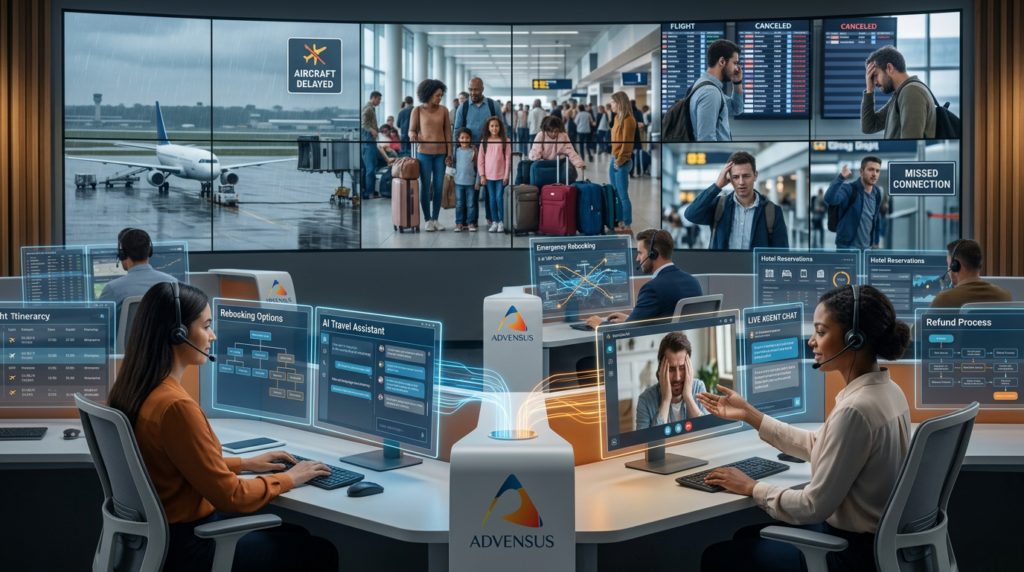
AI is quickly changing how travelers search, compare, book and manage trips. Travelers can now use AI-powered tools to research destinations, summarize hotel options, receive itinerary suggestions, check flight details and get faster answers to common questions.
For travel and hospitality brands, this creates a major opportunity. AI can reduce repetitive workload, improve response speed and help customers move through the booking journey with less friction.
But travel is not just transactional. It is emotional.
A vacation may represent months of planning. A business trip may affect a client meeting. A delayed flight may mean missing a wedding, a cruise departure or a medical appointment. A hotel issue may affect a family’s only trip of the year.
That is why empathy still matters. The future of travel support is not AI replacing human agents. It is AI helping human agents deliver faster, clearer and more personal support when it matters most.
AI Is Becoming Part of the Travel Journey
Travelers are becoming more open to AI. Booking.com’s Global AI Sentiment Report found that 89% of consumers want to use AI in future travel planning, while 91% of respondents said they are excited about AI.
At the same time, the report shows clear boundaries. Only 6% of consumers fully trust AI, and only 12% are comfortable with AI making decisions independently. This reveals a key point for travel brands: customers may want AI assistance, but they do not necessarily want AI control.
That distinction matters across the travel journey. AI may help a customer compare hotel options, receive itinerary suggestions or get a quick answer about check-in time. But when the experience becomes stressful, expensive or uncertain, customers often want a human who can understand the situation and make judgment-based decisions.
Travel Demand Is High, and So Are Service Expectations
Travel demand continues to grow. IATA reported that full-year passenger demand in 2025 rose 5.3% compared to 2024, with international demand increasing 7.1%. The overall passenger load factor reached 83.6%, a record for full-year traffic, according to IATA’s 2025 passenger demand report.
More travelers means more support volume. More bookings also mean more questions, more itinerary changes, more loyalty interactions, more refund requests and more disruption-related contacts.
In this environment, travel brands cannot rely only on self-service. They need a support model that combines automation, proactive communication and trained human agents.
Where AI Works Best in Travel Support
AI is especially useful when the customer needs a fast answer and the path is predictable.
Examples include:
- Checking booking status
- Confirming reservation details
- Sharing check-in or check-out information
- Answering basic policy questions
- Providing flight or itinerary updates
- Routing customers to the right department
- Summarizing previous interactions for agents
- Helping agents draft faster responses
These are valuable use cases because they reduce wait times and free human agents to focus on more complex interactions.
A recent Business Insider article on Heathrow Airport’s AI assistant, Hallie, shows how travel organizations are using AI to handle high-volume traveler questions. Heathrow reported that phone inquiries dropped from 70% of traveler inquiries before Hallie’s launch to 10% by March 2026. But the article also notes that the AI assistant is limited to approved Heathrow data sources, underscoring the importance of accuracy, guardrails and trusted information.
Where Human Agents Still Matter
Human agents remain essential when a traveler needs understanding, flexibility or reassurance.
These moments include:
Disruptions and rebooking
A canceled flight, missed connection or last-minute itinerary change can create stress quickly. Customers may need options, not just information.
Refunds and cancellation confusion
Refund eligibility can be complicated. Travelers often need clear explanations, documentation and reassurance about next steps.
Loyalty and high-value guests
Frequent travelers, loyalty members and VIP guests expect recognition and thoughtful service when something goes wrong.
Special circumstances
Medical needs, accessibility requests, family travel, lost documents or urgent travel changes often require judgment and empathy.
Service recovery
When the brand fails to meet expectations, the way the support team responds can determine whether the customer returns.
PwC’s 2025 Customer Experience Survey found that 86% of consumers say human interaction is moderately or very important in their brand experience. PwC also notes that successful brands use AI intentionally, handing off to humans where empathy and judgment matter.
For travel and hospitality brands, that handoff is not a minor detail. It is a loyalty moment.
The Best Model: AI for Speed, Humans for Trust
McKinsey’s article on agentic AI in travel and hospitality explains that agentic AI could automate airline rebooking during disruptions and handle routine tasks such as processing refunds or issuing vouchers. McKinsey also notes that this could free frontline employees to focus on empathetic, human-to-human customer interactions.
That is the right framing for travel support.
AI should help with speed. Human agents should protect trust.
A strong travel support model should define:
What AI can resolve: routine questions, booking status, simple policy explanations and basic itinerary updates.
What AI can assist: agent summaries, recommended responses, customer history and knowledge base suggestions.
What AI should escalate: angry customers, disruption cases, VIP guests, refund disputes, accessibility needs and complex rebooking issues.
What humans should own: emotional service recovery, judgment-based exceptions, sensitive guest situations and relationship-building moments.
This structure prevents brands from over-automating interactions that require human care.
Why Advensus Fits This Need
Advensus has over 15 years of travel and hospitality experience, supporting services such as reservation and booking support, back-office support, upselling and cross-selling, concierge and guest services, travel disruption management, loyalty program management, multilingual customer service, cancellation and refund processing, and timeshare invitation services.
Advensus operates from the Dominican Republic and Trinidad & Tobago, giving travel and hospitality brands access to nearshore teams with aligned time zones, English-language capabilities, multilingual support potential, operational redundancy and cultural affinity with North America.
That matters because travel support requires more than coverage. It requires tone, judgment, flexibility and the ability to represent the brand during emotionally charged moments.
Final Thought
AI will continue to improve the travel booking journey. It will make research faster, support more efficient and routine questions easier to resolve.
But the most important travel support moments are often the least routine.
When a customer is stranded, confused, disappointed or anxious, they do not only need automation. They need confidence. They need clarity. They need someone who can listen, understand and help.
The travel brands that win loyalty will be the ones that use AI to remove friction while keeping human empathy at the center of the moments that matter.
Advensus helps travel and hospitality brands scale reservation support, guest services, travel disruption management, loyalty support, multilingual customer care, cancellation processing and refund assistance with nearshore teams built for flexibility, empathy and customer trust.
